Services

Acoustic sound boards

Acoustic Sound Boards

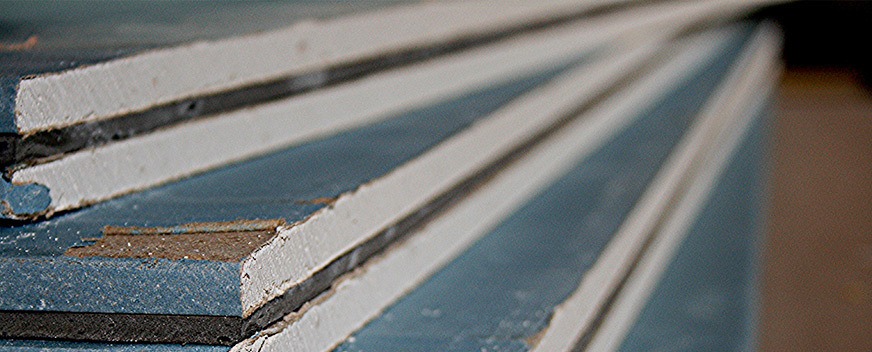
Acoustic sound boards are an ideal treatment for those noisy neighbours who may as well be in the same room as you. At only 22.5mm thick, acoustic panels offer extremely good levels of sound insulation when added to brick or stud walls. The panels are constructed from 12.5mm acoustic plasterboard and a composite panel of an acoustic foam layer sandwiched between two layers of a high-density acoustic membrane. The panels’ composition means sound transferring through the wall is blocked and absorbed at the same time due to the combination of acoustic foam and the density of the product. Soundproofing a wall against noisy neighbours with acoustic sound panels is an ideal solution.
Dry lining boards

Dry Lining

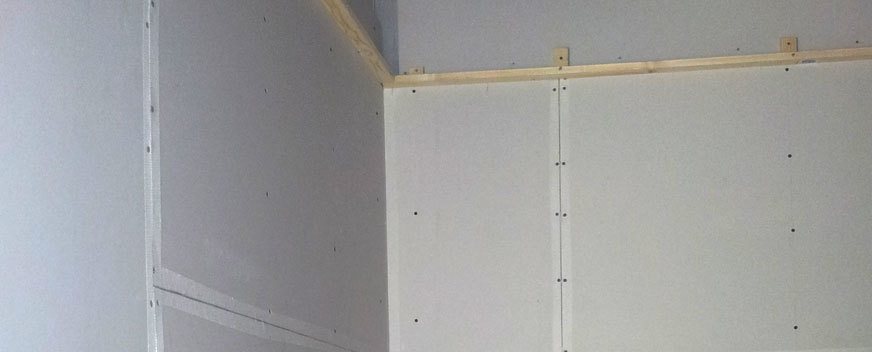
Dry lining refers to the process used when attaching plaster-based sheet boards to either a wooden stud framework, metal stud work or directly to brick or block work using an adhesive compound in a process called dot and dab. It is popular on both new-build applications and refurbishment projects. There are many different types of board used in dry lining, each one suited to a particular purpose or need, from standard plasterboard to specific-needs boards.

Wet plastered walls

Wet Plastering

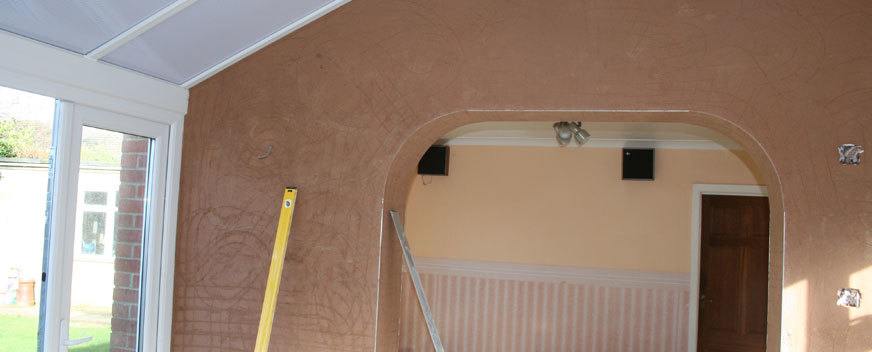
Wet plastering, known as float and set, refers to the process of applying a wet plaster base to the substrate surface before the finish or skim coat is applied. As a minimum this is a two-stage process which in general can take longer than the dry lining or dot-and-dab methods, as the base coat must dry to a certain level before the finish coat can be applied. A base wet plaster can be obtained using many different methods, but the most commonly used are bonding coat, hardwall, and sand and cement. A base-coat plaster is usually 10 to 15mm thick, ruled off and then floated over with a devil float and allowed to dry overnight before the finishing coat can be applied. The skim coat is applied in two coats, each approximately 2mm thick: the first is a coverage coat and the second is the finishing coat.